
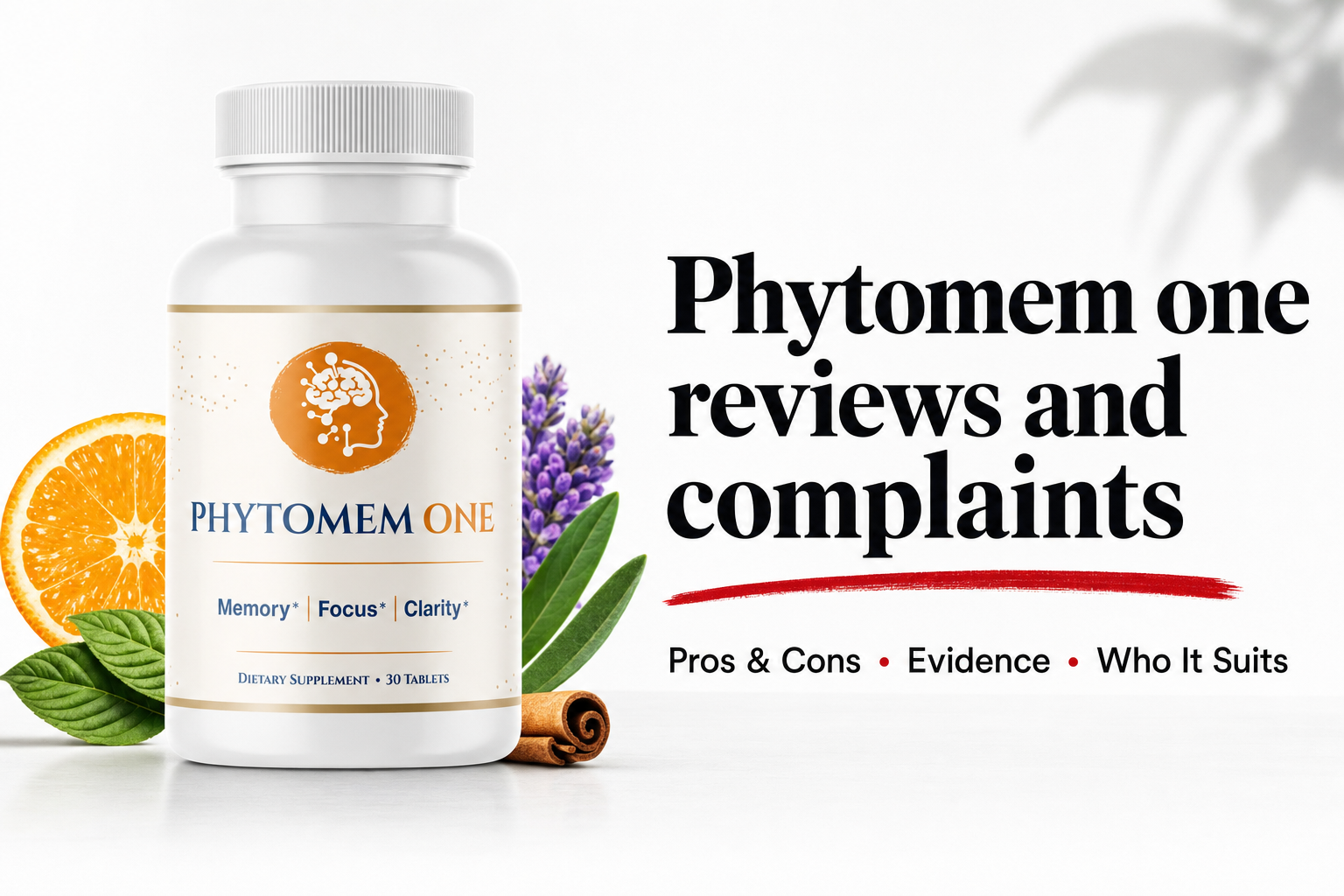
Affiliate disclosure: If you buy through our affiliate link to the sales offer, Health Reserch may earn a commission. This is a review of the posted label, research, and sales terms, not a personal account of taking the tablets or getting a refund.
Phytomem one reviews and complaints: Table of Contents
Check Today's Price on the Official Site →
Phytomem one reviews and complaints: Does it work for memory?
Suppose you buy the tablets because you keep losing a familiar word halfway through a conversation. The useful question isn’t whether any plant on the label has appeared in a medical journal. It’s whether people with a concern like yours recalled words more reliably when they took this particular tablet than when they took a look-alike placebo. Before deciding on Phytomem one reviews and complaints, compare the current price, return terms, and what the seller actually promises.
The available evidence doesn’t answer that question. Some ingredients have a more interesting research history than a blanket dismissal would suggest, but the gaps matter to you as a buyer. In one case, the people studied had Alzheimer’s disease; in another, the researchers measured body weight rather than memory. A useful Phytomem one reviews and complaints review separates verifiable details from promotional language.
Who might it suit? The chewable format may appeal if you dislike swallowing capsules. Beyond that practical preference, the research doesn’t identify a group of buyers likely to get a memory benefit. For someone comfortable paying for an unproven supplement, the decision still depends on medication safety and the actual cost, not just the format. Readers assessing Phytomem one reviews and complaints should check the product details and the source behind each important claim.
- Pro: There’s a posted Supplement Facts panel. You can see all ten named ingredients and show the list to a pharmacist before spending money.
- Pro: There are written purchase and return terms. That gives you something concrete to compare with checkout, even though it doesn’t verify how a return will go.
- Con: The individual amounts are missing. You can’t tell how much saffron, berberine, or any other single ingredient you’re getting.
- Con: Trying it means buying a bundle on the documented offer. The lowest price per bottle requires the biggest upfront payment, despite the uncertainty about benefit.
Reading Phytomem one reviews and complaints: Which studies tested the tablet?
None of the human studies identified in the research tested Phytomem One itself. The seller-posted label describes one chewable tablet per serving, 30 servings per bottle, and 458 mg for the entire blend. That’s not 458 mg of each ingredient, and there’s no basis for assuming the ten ingredients share the total equally. Any conclusion about Phytomem one reviews and complaints should reflect the available evidence, not just testimonials or advertising.
Even the product descriptions don’t always agree. A sales FAQ calls it a capsule, while the label says chewable tablet. The sales copy also uses the branded name Morosil, while the label names only Citrus sinensis, the orange species. For this Phytomem One memory supplement review, the posted panel is the better source for what the seller says is inside, but a label image isn’t a lab test of your bottle. Check the official listing for current details and refund conditions before buying Phytomem one reviews and complaints.
| Label ingredient | What you can learn from the cited research |
|---|---|
| Xylitol | A human study looked at appetite-related brain activity and gut hormones. A change in brain activity isn’t a test of whether you remember a name. |
| Ceylon cinnamon bark | An observational study linked cinnamon use with working memory in people with prediabetes. In a small randomized breakfast study, the reported working-memory benefit was for turmeric, not cinnamon. |
| Corosolic acid from banaba leaf | Small human studies measured blood glucose after a glucose challenge. They didn’t demonstrate better focus or recall. |
| Fucoidan from kelp | The cognitive findings cited were in rodents. Fucoidan isn’t fucoxanthin, despite the similar names and shared kelp source on the label. |
| Citrus sinensis and kudzu flower | The orange extract study assessed weight loss. The kudzu flower study assessed body mass and visceral fat and used a different kudzu species from the one listed. |
| Oleuropein from olive leaf | The GOLDEN trial tested an olive-leaf drink added to usual care and dietary advice in mild Alzheimer’s disease. One cognitive screening score differed, but other measures didn’t differ significantly; the drink wasn’t isolated oleuropein. |
| Berberine HCl | An add-on treatment study reported cognitive benefits in people with chronic schizophrenia. That doesn’t establish a benefit for generally healthy adults buying a memory supplement. |
When you see a reference offered as “Phytomem One clinical research,” check what participants actually received. A paper can accurately describe a positive human finding and still tell you very little about the item in your cart. Whether Phytomem one reviews and complaints is suitable depends on individual needs, the product details, and the evidence available.
Saffron in Phytomem one reviews and complaints: Who was actually studied?
One of the stronger-sounding claims starts with a real placebo comparison. In a small 16-week trial, people with mild-to-moderate Alzheimer’s disease who took 30 mg of saffron daily had better cognitive outcomes than those taking placebo. That’s a more informative result than a customer saying they felt sharper. Treat claims about Phytomem one reviews and complaints cautiously unless they can be confirmed by reliable, independent sources.
But two details get lost if the finding is shortened to “saffron helps memory.” First, adults with a diagnosed illness aren’t interchangeable with adults bothered by everyday forgetfulness. Second, the product label specifies saffron bulb extract. The available documentation doesn’t establish that it matches the trial preparation or supplies the amount studied. Compare Phytomem one reviews and complaints with alternatives using transparent criteria rather than promises alone.
Knowing the trial dose is useful because it shows you what information the label is missing. It isn’t a reason to take extra tablets: doing so would increase your intake of all the other ingredients, too. The study doesn’t show that this blend improves ordinary word recall or prevents dementia. When researching Phytomem one reviews and complaints, separate independently verifiable information from claims made in advertisements.
Fucoxanthin in Phytomem one reviews and complaints: Better than placebo?
A 24-week trial involving 66 people tested a fucoxanthin-containing microalgae extract. Researchers found no advantage over placebo on the primary memory outcome or the other cognitive measures. The product label, meanwhile, lists fucoxanthin from kelp rather than the microalgae extract tested. A balanced assessment of Phytomem one reviews and complaints should include limitations as well as any potential advantages.
Why does the comparison matter? Imagine taking the same kind of memory test twice and scoring higher the second time. You might have become more familiar with the task. If the placebo group also improves, the change in your score alone can’t tell you what the extract contributed. Readers considering Phytomem one reviews and complaints can use these checks to make a more informed comparison.
That’s why “participants improved from baseline” and “the extract beat placebo” aren’t two ways of saying the same thing. The trial didn’t demonstrate the latter. It didn’t test this chewable either, so it’s neither proof that the tablet works nor proof that no one could benefit. Before relying on claims about Phytomem one reviews and complaints, look for clear product details and trustworthy supporting evidence.
Buyer evidence in Phytomem one reviews and complaints: What’s missing?
Seller testimonials may tell you what a storefront chooses to feature. They don’t tell you how purchasers were selected, how many noticed no difference, or whether anyone measured recall before and after use. The ClickBank-linked seller discloses that names are changed and visuals may be recreated or AI-assisted. That doesn’t prove every story is false, but a picture isn’t independent confirmation of an outcome. A careful comparison of Phytomem one reviews and complaints starts with the seller’s terms, the published details, and independent sources.

The complaint record needs just as much care. A Better Business Bureau profile under the distributor’s name was in Colorado, while the label lists Florida. One complaint concerned a different supplement, Metanail, and another didn’t name this product. It wouldn’t be fair to count either as a verified Phytomem One complaint. When reviewing Phytomem one reviews and complaints, look for specific information that a reader can independently verify.
An empty Trustpilot profile for a different domain doesn’t mean buyers have no complaints. Likewise, an automated Reddit domain review isn’t a buyer account, and a Reddit post disclosing affiliate links isn’t independent purchase verification. Taken together, these sources don’t support a reliable satisfaction or complaint rate. The strongest assessment of Phytomem one reviews and complaints explains both what is known and what remains uncertain.
A real offer, a copycat seller, and a misleading ad are three different issues. The documented storefront routed orders to ClickBank; that establishes a sales path, not retailer endorsement or verified fulfillment. The label says “Distributed for: Phyto Thrive Labs,” which doesn’t identify the factory. Several sites call themselves official, including one that says the makers don’t operate it; that discrepancy calls for checking the merchant, not accusing every affiliate of selling counterfeit tablets. Anyone comparing Phytomem one reviews and complaints should confirm that the product page and seller policies are current.
If an ad calls the supplement “FDA approved,” don’t treat that as a mark in its favor. The FDA doesn’t approve dietary supplements before sale. For purchase questions rather than memory claims, the separate guide to checking the seller and checkout identity is more useful than a testimonial.
What a trial purchase costs: The documented US offer listed two bottles for $158 plus $9.95 shipping, three for $207 with free US shipping, or six for $294 with free US shipping. The advertised $49 per bottle was a six-bottle price, not a $49 way to try one. The page described a one-time purchase; check the merchant, order type, and total on your own checkout screen.
The posted refund policy gave buyers 60 days from delivery, required all items to be returned, excluded original shipping, and put return postage on the buyer. Returns were subject to inspection, and the wording didn’t clearly promise a full refund for empty bottles. If the checkout deadline differs, ask for clarification in writing before paying and save the terms with your receipt.
Safety questions behind Phytomem one reviews and complaints: What should you ask?
Bring the complete Supplement Facts panel and your list of prescriptions, over-the-counter medicines, and supplements to a pharmacist. Ask about the ingredients by name rather than just asking whether a “memory vitamin” is safe. With undisclosed ingredient doses, the pharmacist can flag a concerning combination but may not be able to quantify your exposure.
Who should skip it or get advice first? Skip it during pregnancy or breastfeeding because it contains berberine; the National Center for Complementary and Integrative Health advises against berberine use in those settings. If you take cyclosporine, don’t start the tablet without your prescribing team’s review: berberine can interact with that medicine. If you use diabetes medication, ask your pharmacist or clinician about possible blood-sugar effects before taking it. Don’t change a prescribed medicine to make room for the supplement.
There’s another reason to pass that has nothing to do with interactions. If memory trouble is new, worsening, or interfering with things like paying bills or taking medicines correctly, make a medical appointment rather than waiting to see whether a bundle of tablets helps. Bring concrete examples of what changed and when; those are more useful for that conversation than the product’s list of advertised benefits.
What would change this assessment of Phytomem one reviews and complaints?
The most useful addition would be a registered, published finished-product human trial. For a claim about everyday recall, it should enroll people with that concern, test the marketed tablet against a matching placebo, and identify the main memory outcome before results are known. I’d want to know how large any difference was, whether people would notice it in daily life, and what side effects or dropouts occurred.
Different evidence would answer the manufacturing question: a named factory, documentation tying it to the distributor, and an independent lab report matching a lot number on a bottle. That would improve confidence about what you’re buying, not prove that it helps you remember. Until those separate questions have answers, I wouldn’t pay a bundle price for the promise of better recall.
Reader questions about Phytomem one reviews and complaints
- Does Phytomem One improve everyday memory or word recall?
That hasn’t been demonstrated. Phytomem one reviews and complaints don’t provide a controlled measure of whether buyers recall words more easily after taking the tablet.
- Has the finished tablet been tested against a placebo in people?
No published trial matching that description was identified in the research reviewed. Trials of individual ingredients or related extracts aren’t trials of the finished blend.
- Do the saffron studies apply to someone with ordinary forgetfulness?
Not directly. The placebo-controlled trial discussed here enrolled people with mild-to-moderate Alzheimer’s disease, and the tablet’s saffron bulb extract hasn’t been shown to match the study preparation or dose.
- Did people taking the fucoxanthin extract do better on memory tests than those taking a placebo?
No between-group advantage was found in the 24-week microalgae extract trial. A higher score than someone’s own starting score isn’t the same as outperforming placebo.
- Are the memory improvements described in seller testimonials independently verified?
Not in the material reviewed. Even confirming a purchase would establish only that someone bought the product, not that the tablet caused a change in memory.
- What should I ask a pharmacist before taking Phytomem One with my medications?
Ask, “Do any ingredients conflict with my medicines, and do the missing amounts make this a product I should avoid?” Point out berberine in particular if you take cyclosporine or medicine for diabetes.
Evidence notes: Product details and sales terms come from the ClickBank-linked seller’s Supplement Facts image, offer, refund policy, and disclosures. Research discussed includes the saffron trial in the Journal of Clinical Pharmacy and Therapeutics (DOI: 10.1111/j.1365-2710.2009.01133.x), the microalgae extract trial (PubMed Central: PMC11397347), the GOLDEN olive-leaf study (PubMed: 39585054), and the adjunctive berberine study (PubMed: 37069570). Safety and regulatory context comes from the National Center for Complementary and Integrative Health’s berberine information and the US Food and Drug Administration’s dietary supplement guidance.
Medical disclaimer: This review is for health education, not a diagnosis or a personalized supplement recommendation. A clinician or pharmacist who knows your health history can help you assess memory changes or decide whether an ingredient is safe with your medicines.
Phytomem one reviews and complaints: Related guides
Check Today's Price on the Official Site →
This article is for information only and is not medical advice. Talk to a doctor or pharmacist before starting any supplement, especially if you are pregnant, take medication, or have a health condition.
Phytomem one reviews and complaints: Research notes
Sources consulted during preparation (listed without external hyperlinks): getphytomemone.com, goodhealthreviews.com, proreviewmetric.com, buyphytomemone.com, phytomemon.com, phytomemdaily.com, phytomemo.com, pubmed.ncbi.nlm.nih.gov, onlinelibrary.wiley.com, pmc.ncbi.nlm.nih.gov, bbb.org, trustpilot.com.